
Concrete Driveways
We build durable concrete driveways that handle daily traffic and enhance your property value.
Why Concrete Driveways Outperform Other Options
When you need a concrete driveway, you have several material choices. Concrete stands out as the best option for most homes because of its exceptional longevity and low maintenance requirements. While asphalt costs less initially, it requires regular sealing and breaks down faster under sun exposure. Pavers look attractive but shift over time, develop weed problems between joints, and cost significantly more than concrete.
Our concrete driveways easily last 30 years or more with minimal care. The solid surface does not develop ruts or potholes like asphalt, and you never need to replace individual pieces like pavers. Concrete reflects sunlight better than dark asphalt, which keeps surrounding areas cooler and reduces heat island effects around your home.
Benefits of Professional Concrete Driveway Installation
- Exceptional durability that withstands heavy vehicle loads and weather extremes
- Low maintenance needs compared to asphalt or pavers
- Clean appearance that enhances curb appeal and property value
- Versatile design options including stamping, coloring, and exposed aggregate finishes
- Excellent return on investment when selling your home
- Environmentally friendly material that can be recycled if ever removed
The key to getting these benefits is proper installation. A skilled concrete driveway contractor follows proven methods for base preparation, reinforcement, and finishing that make your driveway perform as expected for decades.
Our Proven Driveway Installation Process
Quality driveway construction starts long before the concrete truck arrives. We begin by marking utility lines and removing the existing driveway surface if needed. Excavation goes deep enough to accommodate the base layer and concrete thickness. We typically dig down 8 to 10 inches for most residential driveways. This depth allows for 4 to 6 inches of compacted base material and 4 inches of concrete.
The subgrade gets compacted first to create a stable foundation. Then we install the base layer using crushed stone or gravel compacted in lifts. This base provides drainage and prevents settling. We pay special attention to grading so water flows away from your garage and home. Poor drainage causes the most common driveway problems, so we make sure to get this right.
Reinforcement and Pouring
Before pouring, we install wire mesh or rebar reinforcement. This steel strengthens the concrete and helps control cracking. The reinforcement must sit at the correct height within the slab thickness to work properly. We use chairs or supports to position it accurately. Forms get set to the exact dimensions and slope you need.
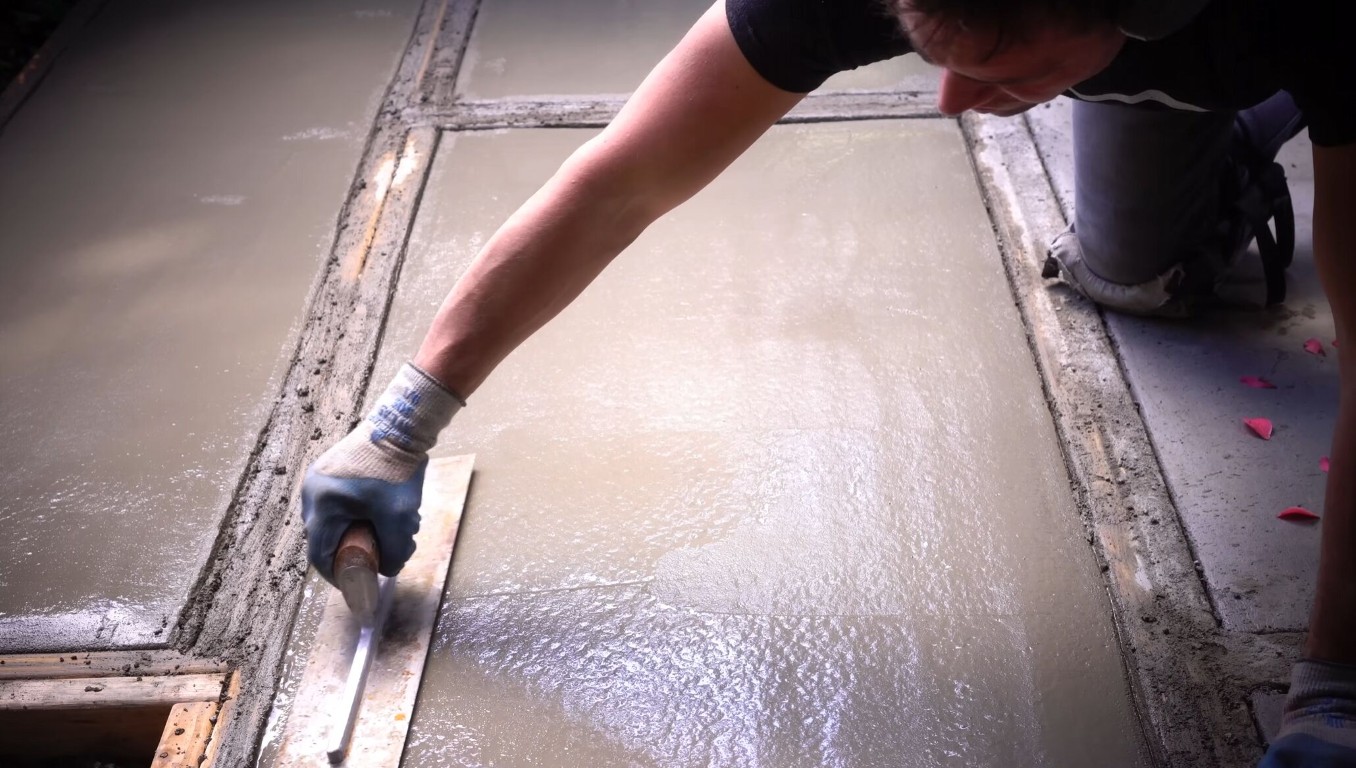
During the pour, we work efficiently to place and finish the concrete before it starts setting. The surface gets screeded level, floated smooth, and finished with the texture you selected. Control joints are cut at regular intervals to direct any cracking to predetermined locations. Proper curing follows, which involves keeping the concrete moist and protected for several days. This step is crucial for developing full strength and durability. You can typically drive on your new driveway after 7 days, though it continues gaining strength for 28 days.
Custom Design Options for Your Driveway
Concrete driveways no longer mean plain gray surfaces. Modern decorative techniques let you create unique looks that complement your home's style. Stamped concrete patterns mimic brick, stone, or tile at a fraction of the cost of those materials. The stamps create realistic texture and pattern variations. Color can be added throughout the concrete or applied as a surface stain for rich, varied tones.
Exposed aggregate finishes reveal the natural beauty of stones within the concrete mix. This creates a textured, slip-resistant surface with visual interest. Borders and accent bands add definition and can incorporate different colors or patterns. We can also create curved edges, flared entries, or custom shapes that enhance your landscaping.
Planning Your Driveway Layout
Driveway width and configuration affect both function and appearance. A single-car driveway needs at least 10 feet of width, but 12 feet provides more comfortable clearance. Two-car driveways should be 20 to 24 feet wide. If you park vehicles side by side in the driveway rather than in a garage, extra width makes getting in and out easier.
Turning radius matters if your driveway has curves or meets the street at an angle. We calculate the turning requirements for your vehicles to ensure adequate clearance. Extensions and turnaround areas can be added to provide parking or make backing out easier. We help you plan a layout that works with your property while meeting local setback and drainage requirements. For more outdoor concrete projects, consider our patio installation services or walkway solutions.
Concrete Driveway Questions Answered
We have answered the most common questions homeowners ask about concrete driveway installation and costs.