
Concrete Slab & Foundation Work
We build structural concrete slabs and foundations that provide solid support for your building projects.
Why Foundation Quality Matters More Than Anything
Your foundation literally supports everything built on top of it. Problems with the foundation affect the entire structure, causing cracks in walls, sticking doors, and costly repairs. A properly designed and installed foundation prevents these issues and ensures your building stays structurally sound for its entire life. Shortcuts or poor workmanship at the foundation stage create problems that only get worse and more expensive to fix over time.
We take foundation work seriously because we understand what is at stake. Every foundation project gets careful planning, precise execution, and thorough quality control. We follow building codes, work with engineers when required, and use proven construction methods. The result is a foundation that performs exactly as designed, giving you peace of mind for decades.
Foundation and Slab Applications We Handle
- Residential home foundations including slab-on-grade and stem wall designs
- Garage and workshop slabs sized for vehicle loads and equipment
- Storage building and shed foundations with proper anchoring provisions
- Commercial building slabs designed for specific load requirements
- Addition foundations that properly integrate with existing structures
- Equipment pads for HVAC units, generators, and heavy machinery
Each type of foundation has specific requirements for thickness, reinforcement, and design details. We size everything appropriately for the intended use and local soil conditions.
Site Evaluation and Soil Preparation
Foundation design starts with understanding your soil. Different soil types have different bearing capacities, which is their ability to support weight. Clay soils expand and contract with moisture changes, which can cause movement. Sandy soils drain well but may not provide adequate support without compaction. Organic soils compress over time and must be removed entirely. We evaluate your site conditions and recommend appropriate foundation designs.
Site preparation involves removing unsuitable material and reaching stable soil. We excavate to the depth specified in the plans, which varies based on frost depth and soil conditions. The bottom of the excavation gets compacted to create a stable base. For problem soils, we may need to over-excavate and backfill with engineered fill material. These steps cost money upfront but prevent expensive foundation problems later.
Drainage and Moisture Control
Water is the enemy of foundations. We design and install proper drainage systems that keep water away from your foundation. Site grading directs surface water away from the building. For slabs, we install a vapor barrier under the concrete to prevent moisture from wicking up through the slab. Perimeter drains may be needed in areas with high water tables or poor drainage.
Ignoring drainage leads to problems like settlement, cracking, and moisture intrusion. We have seen too many foundations compromised by water issues that could have been prevented with proper design. Our approach prioritizes long-term performance over cutting corners that save a few dollars initially but cost thousands in repairs later.
Our Foundation Construction Process
Foundation work follows a specific sequence that cannot be rushed. After site preparation, we install the base layer and compact it thoroughly. Forms get set to exact dimensions and elevations. We verify everything with laser levels and measuring tools before proceeding. Any utilities that need to run under the slab get installed at this stage, including plumbing and electrical conduits.
Reinforcement installation requires careful attention to specifications. Residential slabs typically use wire mesh or rebar grids positioned at mid-height of the slab. Commercial foundations may require more substantial reinforcement sized by an engineer. We use chairs and supports to hold reinforcement at the correct height during the pour.
Pouring and Finishing
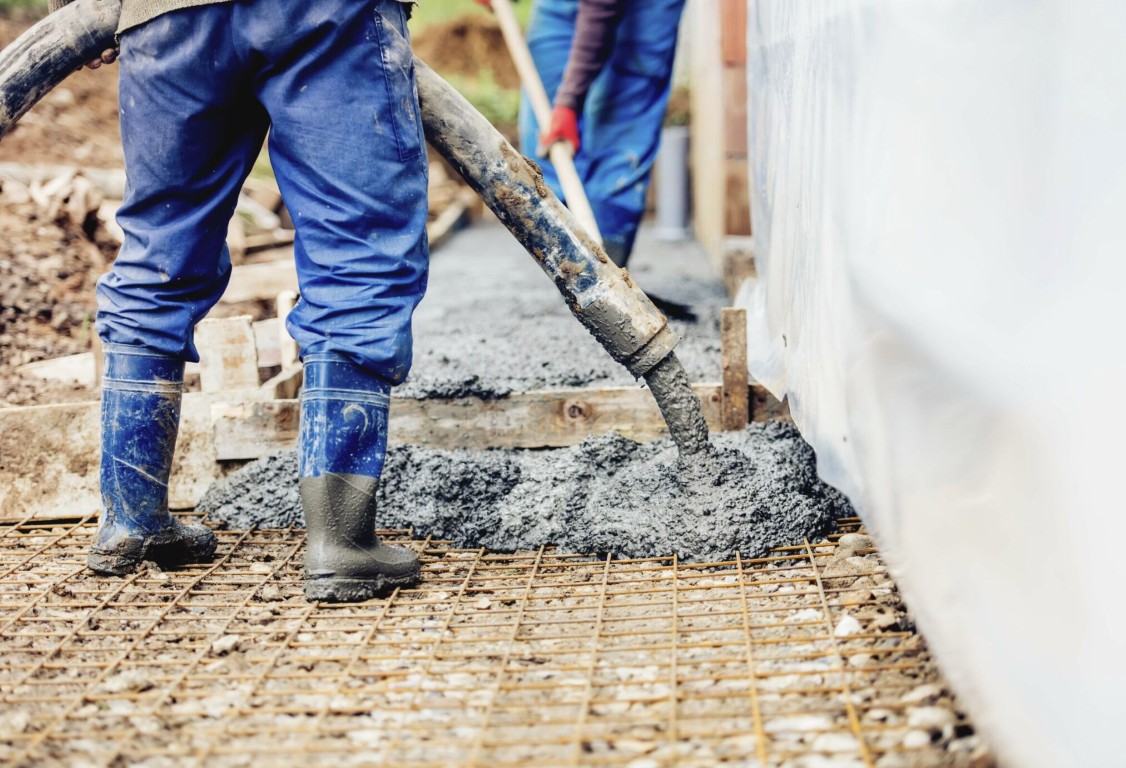
The concrete pour must proceed efficiently to maintain consistency throughout the slab. We use concrete with the correct strength rating for the application. As concrete is placed, we work it into all areas and around reinforcement. Vibration removes air pockets that weaken the concrete. The surface gets screeded level, floated smooth, and finished to the specified texture.
Curing is critical for foundation concrete. We keep the slab moist and protected for at least 7 days to allow proper strength development. Building on foundations before they have cured adequately can cause problems. We coordinate timing with your builder or provide guidance on when construction can proceed safely. For related foundation and structural work, see our masonry services.
Foundation Work Questions Answered
Property owners planning foundation projects commonly ask these questions about requirements and costs.